Building AI Systems with Atomic Agents: Reducing Costs and Boosting Efficiency
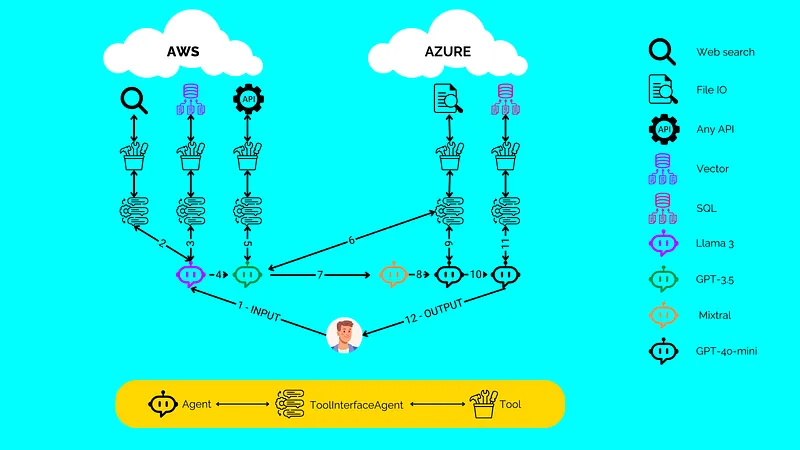
Each agent and tool is reusable in the system and can be build on further in the future or can be used by a complete new system. reusability of created agents and tools is key. source: image by author
Imagine building a Lego castle. You don’t start from scratch each time; instead, you use pre-made blocks that fit together perfectly. That’s the idea behind the Atomic-Agents framework for AI development. This approach allows developers to create complex AI systems by snapping together smaller, reusable components, much like Lego blocks. This not only speeds up development but also reduces costs and makes maintenance a breeze.
The New Frontier in AI Development
Artificial Intelligence (AI) is revolutionizing industries, but building AI systems can be a daunting task. The complexity, cost, and time required can be overwhelming. Enter the Atomic-Agents framework, a game-changer that promises to simplify AI development, reduce costs, and enhance efficiency. Let’s dive into how this innovative approach works and why it’s the future of AI development.
Why Traditional Methods Fall Short
Traditional AI development often involves creating monolithic systems that are hard to manage, update, and scale. These systems are like giant, unwieldy machines where a single malfunction can bring everything to a halt. Moreover, starting each project from scratch is not only time-consuming but also costly.
The Atomic Agents Framework: A Modular Approach
The Atomic Agents framework is inspired by Atomic Design principles, which break down complex systems into smaller, reusable components. Think of it as building with Lego blocks. Each block (or agent) is a self-contained unit that can be easily combined with others to create a larger system. This modular approach offers several benefits:
- Reusability: Once an agent is created, it can be reused in multiple projects, saving time and effort.
- Flexibility: Need to update or replace a component? No problem. The modular design allows for easy modifications without disrupting the entire system.
- Scalability: Adding new features or scaling up is straightforward. Just snap in new agents as needed.
Key Components of the Atomic Agents Framework
The framework consists of three main building blocks:
- Agents: These are the core units connected to a Large Language Model (LLM) of your choice, such as GPT-4, Llama or Claude.
- Tools: These can be anything from storage systems to APIs or applications like browsers or calculators.
- ToolInterfaceAgents: These agents transform human-readable input into structured data that tools can use and vice versa.
Each component can be customized and extended to fit specific business needs without the hassle of rewriting large portions of the code base.
Reducing Development Costs: The Atomic Way
Reducing development costs is a primary concern for any business. The Atomic Agents framework addresses this in several ways:
- Modular Design: By breaking down the system into smaller, reusable components, development time and costs are significantly reduced.
- Cloud Agnosticism: The framework is cloud-agnostic, meaning you can deploy it on any cloud service or even on-premise. This flexibility helps avoid vendor lock-in and reduces cloud expenses.
- Multiple Models: You can use different models for different tasks within the same system. For instance, use a cost-effective model like Llama for simpler tasks and a more powerful model like GPT-4 for complex ones. This selective use of models can lead to substantial cost savings.
Reusing Existing Systems and Code Bases
One of the standout features of the Atomic Agents framework is its ability to integrate with existing systems. If your current system has an API, you’re good to go. You can create a tool to interact with the API, allowing any agent in your system to leverage it. This means you don’t have to discard your existing investments; instead, you can build on top of them.
☁️ Cloud Agnosticism: Freedom to Choose
Cloud services can be expensive and often come with the risk of vendor lock-in. The Atomic Agents framework is designed to be cloud-agnostic, giving you the freedom to choose any cloud provider or even run your system on-premise. This flexibility not only reduces costs but also allows you to mix and match cloud services as needed.
Building in Isolation and Connecting Later
The framework allows for building isolated systems that can be connected later. This means you can develop a system to solve a specific business case and then extend it by adding new agents. These new agents can either reuse existing ones or leverage the same storage. You can even build two isolated multi-agent systems and later bridge them with additional agents, ensuring seamless integration.
Extending and Replacing Parts with Ease
Think of the Atomic Agents framework as a design system for AI. Instead of creating UI components, you design dedicated agents and tools. By designing agents and tools in isolation and following standard input/output schemas, you ensure they are replaceable, extendable, and removable by design. This approach significantly lowers maintenance costs over the system’s lifetime.
Real-World Applications and Benefits
The Atomic Agents framework is not just a theoretical concept. It has practical applications across various industries:
- Customer Service: Deploy multiple agents to handle different aspects of customer queries, from answering FAQs to processing orders. This modular approach ensures that each agent specializes in a specific task, improving efficiency and customer satisfaction.
- Predictive Maintenance: Use AI-driven agents to analyze sensor data and predict equipment failures before they occur. This proactive approach reduces downtime and maintenance costs.
- Dynamic Pricing: Implement AI-powered pricing algorithms that adjust prices based on real-time market conditions, customer behavior, and competitor analysis. This ensures competitive pricing while maximizing revenue.
Implementing the Atomic-Agents Framework
Implementing the Atomic Agents framework involves several steps:
- Define Requirements: Clearly outline the business requirements and goals for the AI system.
- Design Agents and Tools: Break down the system into smaller, self-contained agents and tools. Define the input/output schemas for each component.
- Develop and Test: Develop the agents and tools, ensuring they adhere to the defined schemas. Test each component individually and as part of the larger system.
- Deploy: Choose the deployment environment, whether it’s a cloud service or on-premise, and deploy the system.
- Monitor and Optimize: Continuously monitor the system’s performance and make necessary adjustments to optimize efficiency and reduce costs.
The Future of AI Development
The Atomic Agents framework represents a significant shift in AI development. By focusing on modularity, reusability, and flexibility, it addresses many of the challenges associated with traditional AI development methods. As more businesses adopt this approach, we can expect to see faster development cycles, reduced costs, and more efficient AI systems.
Conclusion
Building AI systems doesn’t have to be a complex, costly endeavor. The Atomic Agents framework offers a modular, flexible, and cost-effective approach that simplifies development and enhances efficiency. By breaking down AI systems into smaller, reusable components, businesses can reduce development costs, reuse existing systems, and easily extend or replace parts of the system. The future of AI development is here, and it’s modular, efficient, and cost-effective.