The Ethics of AI Writing: Navigating the New Frontier
The most important aspect of sharing content is conveying my ideas, advice, and vision effectively. If AI can help me do that more efficiently, why not use it?
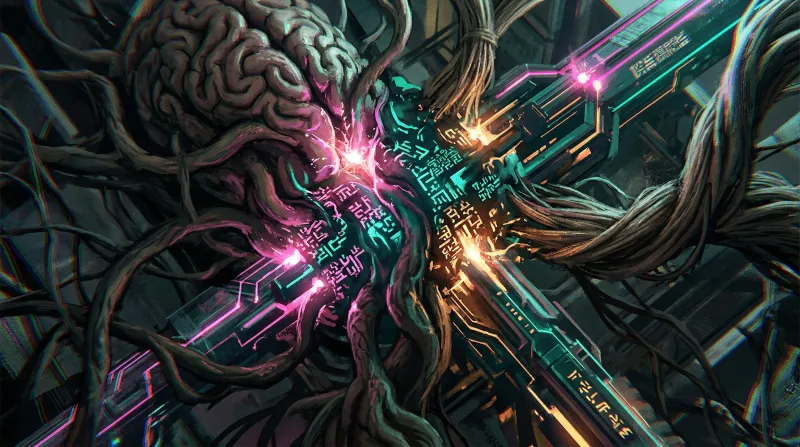
source: Nano Banana
Is it wrong to use AI for writing?
In this article, I’ll explore whether using AI for writing is ethically sound. Drawing from personal experience, I’ll examine the challenges of traditional writing, the potential of AI tools, and the ethical considerations they raise. By sharing my journey with AI-assisted writing, I aim to provide a balanced perspective on this controversial topic.
The AI Writing Dilemma
Sitting at my desk, staring at my screen, I ponder this question as I work on an article about “Multi-Model AI — The Symphony of Specialized AI Swarms.” Is it really such a bad thing to use AI to help me write? The cursor blinks, taunting me with its steady rhythm, as if counting down the seconds until I make a decision.
Transparency and Ethics
In the spirit of transparency, I believe it’s important to share my process with you. In the comments below, you’ll find my initial brain dump for this article — the raw, unfiltered thoughts that formed the foundation of this piece and some prompts I used to steer the AI. I encourage you to take a look and see how the ideas evolved from concept to finished product.
Additionally, I want to be clear that this article has been edited and refined with the assistance of AI. I believe it’s ethical and necessary to disclose this fact. The core ideas, research, and personal experiences are all mine, but I’ve leveraged AI to help articulate these thoughts more effectively.
The Seeds of Imagination: My Journey with Sci-Fi and AI
Before you grab your pitchforks and torches, let me explain how I use AI. I’ve been devouring comics since I was 5 and books as soon as I could read. My favorite genres — sci-fi, fantasy, and history — have fueled my vivid imagination.
I can still remember the first time I cracked open a weathered copy of Asimov’s “Foundation,” the musty smell of old paper mingling with the promise of adventure. Those stories, filled with impossible technologies and fantastical worlds, planted seeds in my mind that would later bloom into a fascination with AI and its potential.
My love for science fiction, particularly the gritty, tech-noir world of Cyberpunk, has been a driving force in my exploration of AI. The neon-lit streets, chrome-enhanced humans, and omnipresent AI systems of Cyberpunk narratives have always captivated me. This fascination led me to write an article titled ‘Cyborgs, AI, and Credsticks: How Sci-Fi is Shaping Our Future”, where I delve into how these once-fictional concepts are increasingly becoming our reality.
A Journey Through Industries
My unconventional career path has led me through various industries, giving me a unique perspective on cross-pollinating ideas. I’ve worn many hats — from tech startup founder to corporate consultant, each role adding a new layer to my understanding of how ideas can transcend their original contexts.
It’s like being a bee, buzzing from flower to flower, collecting pollen from diverse sources and creating something entirely new in the process.
The Struggle to Improve
A few months ago, I decided to become a better writer. I stopped using AI and turned to tools like spelling and grammar checkers, even Grammarly. But with dyslexia and English not being my native language, it’s been a struggle.
Words that flow so easily in my mind seem to tangle and twist when I try to pin them down on paper. It’s like trying to catch smoke with your bare hands — frustrating and often futile.
Choosing My Path
Recently, I asked myself: do I want to be a great writer or a great AI consultant and strategist? The answer is clear — the latter. So why waste time agonizing over words when I could be learning and applying AI-related skills? I use AI on a daily base for my job and to help clients, I teach clients how to use it and to implement it in their company and processes. It would be strange that using AI all day every day I would not use it to write my articles.
It’s like choosing between spending hours polishing a single gemstone or mining an entire cave full of precious minerals. Both have value, but one aligns more closely with my ultimate goals.
The Writing Challenge
Here’s the thing: I’m not great at writing. I can visualize stories in my head, entire worlds unfolding like a movie behind my eyes, but translating them into captivating prose has always been a challenge.
My typical process involves brain-dumping ideas, researching topics, gathering examples, and structuring the article. But at this point, it often resembles a disjointed research paper — a list of paragraphs without a coherent narrative thread.
It’s like having all the ingredients for a gourmet meal but lacking the culinary skills to bring them together into something delicious.
Enter AI: The Master Chef
I could spend days with a thesaurus and spelling book, but let’s be honest — the fun would evaporate by the fourth revision. This is where AI comes in. It can transform my ideas into a flowing, engaging piece that people actually want to read.
It’s like having a master chef at my side, taking my rough ingredients and turning them into a masterpiece.
The Double Standard
People have strong opinions about using AI for writing. They claim it’s not authentic or human enough. But let’s consider other accepted practices:
- Journalists have editors who may significantly alter their work
- Writers use tools like Grammarly (which is AI-powered)
- Ghostwriters are widely employed
- C-suite executives have assistants create their presentations
- Companies outsource content creation
- Even presidential speeches are written by others
We accept all of these practices, so why the outrage over AI assistance? It’s as if we’ve drawn an arbitrary line in the sand, declaring some forms of writing help acceptable while demonizing others.
Embracing AI as a Writing Tool
After much reflection, I’ve decided to embrace AI as my ghostwriter, spelling checker, and editor. The most important aspect of sharing content is conveying my ideas, advice, and vision effectively. If AI can help me do that more efficiently, why not use it?
It’s like having a brilliant collaborator who never sleeps, never tires, and is always ready to help refine my thoughts.
The New Writing Process
My new process will involve brain dumping ideas, conducting research, finding examples, and structuring the article. Then, I’ll use AI with specific instructions on flow, style, tone, and key points.
For those interested in my writing process, here’s a brief overview:
My writing process involves extensive research, personal reflection and experience, and a comprehensive brain dump of ideas. I then use AI as a sophisticated ghostwriter to refine and articulate these thoughts, ensuring the final piece maintains my voice while benefiting from enhanced clarity and structure. And after this draft I do the final editing of the article before I post it.
I believe this approach allows me to focus on what I do best — generating ideas and insights — while using AI to overcome my challenges with written expression. It’s a collaboration between human creativity and machine efficiency that I find both exciting and productive.
It’s a dance between human creativity and machine efficiency, each step carefully choreographed to produce the best possible outcome.
The Future of Writing
As I sit here, contemplating the future of writing in an AI-enhanced world, I can’t help but feel a sense of excitement. We’re standing on the brink of a new frontier in creativity, where the boundaries between human and machine blur into something entirely new.
It’s a world that would have seemed like pure science fiction not too long ago, and yet here we are, living in it.
Your Thoughts?
What are your thoughts on this approach? I’m genuinely curious to hear your opinions and understand why some are so opposed to using AI in writing. Is it fear of the unknown? A desire to cling to traditional methods? Or perhaps a deeper concern about the nature of creativity itself?
Let’s continue this conversation and explore these ideas together. After all, it’s through dialogue and debate that we often find the most innovative solutions.
As we navigate this brave new world of AI-assisted writing, let’s keep our minds open to the possibilities while remaining mindful of the potential pitfalls. The future of writing is being shaped right now, with each word we type and each AI prompt we craft. It’s up to us to decide what that future will look like.