Enterprise AI Training is Theater: What I Saw Inside 50-Person Corporate Workshops
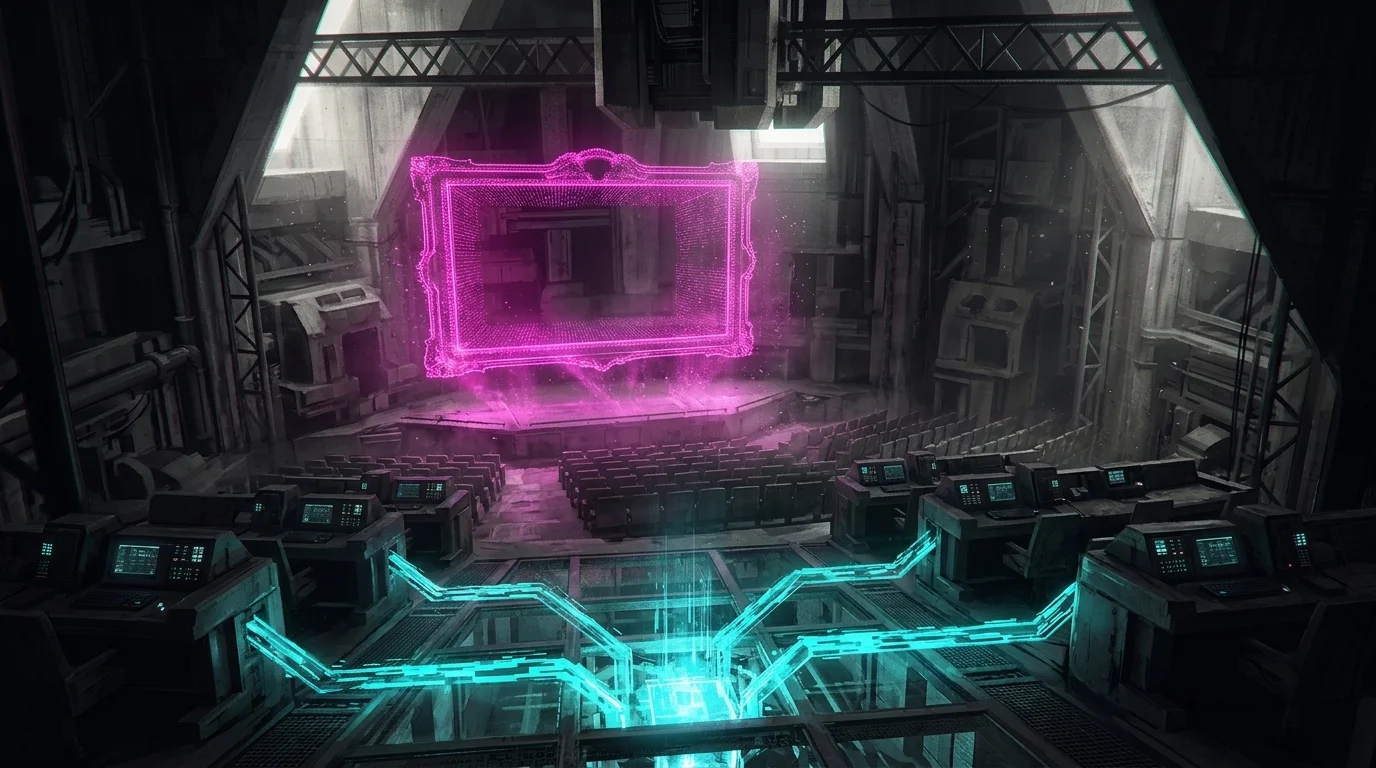
Corporate leadership loves the spectacle of the company-wide "AI Day."
An enterprise board allocates fifty thousand euros, books an offsite venue, mandates attendance across the organization, and brings in keynote speakers and trainers to talk about the exponential future of artificial intelligence.
As a consultant embedded across different enterprise clients, I have been invited to attend several of these company-wide AI events. I am not on stage selling the hype. I sit right there in the crowd among the engineers and business analysts, and I observe the people around me.
Here is what I see from the audience with my own eyes:
Half the crowd is looking down at their smartphones. A quarter of the room has their laptops open on their laps, aggressively catching up on Jira tickets and Slack threads. The remaining attendees stare blankly at the projector screen, waiting for the scheduled coffee break.
The common assumption among executive leadership is that developers are eagerly experimenting with frontier AI at home, just waiting for corporate permission to deploy it.
The reality in the seats is completely different.
1. The Floor Audit: What Enterprise Developers Actually Say
During these events and across the engineering floors of large enterprise departments, I talk directly with the developers sitting around me and ask two simple questions.
Question 1: "What have you actually built or shipped with AI so far?"
When you ask fifty senior developers and systems engineers what they actually use in their daily development workflow, the answers are sobering.
One senior engineer shrugs and admits:
"I installed GitHub Copilot yesterday."
More than 60% of the developers in the room have never touched an LLM API. Most have never used an autonomous coding agent like Cursor or Claude Code. They have played with ChatGPT to rephrase an email, but when it comes to their production codebases, they have zero active experience.
Question 2: "What do you expect AI to do for your engineering workflow?"
When I push them to explain what value they expect from these tools, the answers are shockingly modest:
"Having a chatbot in my editor so I do not have to search Stack Overflow. Or maybe we could generate some tests."
Think about the cognitive gap between the board room and the engineering floor:
- The Boardroom Thesis: "We are deploying agentic swarms to reinvent our core product line and achieve a 40% margin expansion."
- The Developer Reality: "I want autocomplete so I do not have to Google regex syntax."
This is not a failure of developer talent. It is the natural consequence of AI Awareness Theater.
2. Why Corporate AI Training Fails by Design
Enterprise AI adoption does not fail because your engineers are lazy or incapable. It fails because corporate training programs treat AI as an intellectual novelty rather than an engineering constraint.
Three structural flaws guarantee failure:
1. Generalist Demos vs. Specific Codebase Friction
Showing an engineer how an LLM can write a Python script to play Tic-Tac-Toe is useless. The engineer does not build Tic-Tac-Toe; they maintain a 12-year-old multi-tenant banking backend with circular dependencies, undocumented internal APIs, and strict data-sovereignty constraints.
If the training does not address their specific repository boundaries, the engineer immediately dismisses AI as toy software.
2. The Blank Canvas Trap
When a company buys enterprise licenses and hands them to developers with zero configuration, the developer opens an empty chat sidebar. They type a casual prompt, receive a generic response that hallucinates an internal database wrapper, and conclude: "This tool does not understand our architecture."
Without deterministic rule files (AGENTS.md) and scoped local tools, conversational prompting fails on contact with legacy code.
3. Fear of Output Liability
Senior engineers know that they are held personally accountable for production outages. If management tells them to "use AI," but offers zero governance, zero verification harnesses, and zero legal clarity on data leakage, the rational developer self-preservation strategy is simple: do not touch it.
3. The Solution: Centralized Architecture Over Training Days
You cannot train your way into AI adoption through PowerPoint seminars. You must engineer adoption into your repository infrastructure.
If you are a CTO or VP of Engineering, stop organizing generalist training days. Instead, build a Centralized AI Systems Architecture:
                  ┌──────────────────────────────┐
                  │    CENTRAL AI ARCHITECT POD  │
                  │  • Diagnoses real repo debt  │
                  │  • Crafts deterministic rules│
                  │  • Binds local MCP tools     │
                  └──────────────┬───────────────┘
                                 │
         ┌───────────────────────┴───────────────────────┐
         ▼ (GitOps Sync)                                 ▼ (GitOps Sync)
 ┌──────────────────────────────┐        ┌──────────────────────────────┐
 │    Developer Workstation A   │        │    Developer Workstation B   │
 │ • Pre-configured rule harness│        │ • Pre-configured rule harness│
 │ • Scoped MCP tool boundaries │        │ • Scoped MCP tool boundaries │
 │ • Deterministic TDD loops    │        │ • Deterministic TDD loops    │
 └──────────────────────────────┘        └──────────────────────────────┘
1. Embed a Dedicated Architecture Pod
Form a small, centralized strike team (or bring in a Fractional Head of AI) whose sole job is to diagnose the actual friction points in your delivery pipeline: slow unit tests, repetitive API scaffolding, schema migrations, and documentation syncs.
2. Ship Pre-Configured Workstation DNA
Do not ask developers to write prompts. Build a centralized GitOps repository containing modular rule files (.agents/rules/), schema definitions, and local MCP tool bindings. When an engineer pulls the latest branch, their local agent wakes up already understanding your coding standards, your architecture boundaries, and your testing protocols.
3. Replace Curiosity with Contracts
Define exactly what the agent is allowed to do. Give it closed-loop verification directives: write the test, run the test runner, check the diff against the linter, and halt if tests fail twice. Turn the agent from an unpredictable chatbot into a deterministic compiler.
Conclusion: Stop Entertaining, Start Architecting
The era of entertaining employees with generative AI parlor tricks is over.
If your enterprise AI strategy relies on voluntary adoption and generic workshop seminars, you will waste your budget while your best engineers quietly ignore the mandate.
Adoption happens when the tools are already configured, the guardrails are deterministically enforced at the repository boundary, and using the system is demonstrably faster than writing boilerplate by hand.
Stop booking workshop seminars. Build the sovereign architecture that makes adoption inevitable.
Related Architecture Essays
- Previous in Series: How to Build and Scale an Engineering Team in the AI Era
- Foundation Essay: Context is Permanent, Syntax is Temporary: Why Strict AI Governance Costs More Tokens
- Enterprise Case Study: Case Study: Enforcing AI Rule Rollouts for 200 Developers (The Package Manager for AI)
Moving AI From Pilots Into Governed Production?
Stop building fragile workflows on raw conversational prompts. If you are a CIO, CTO, or engineering leader transitioning squads from AI theater to production governance:
- Senior AI & Enterprise Architecture Mandates (3-5d/wk), Fractional Head of AI, & 5-Day Architecture Blueprints: Connect on LinkedIn or explore younesbaghor.com.
Younes Baghor
Fractional Head of AI & Senior AI Architect | Managing Director, WebWizArt.be BV